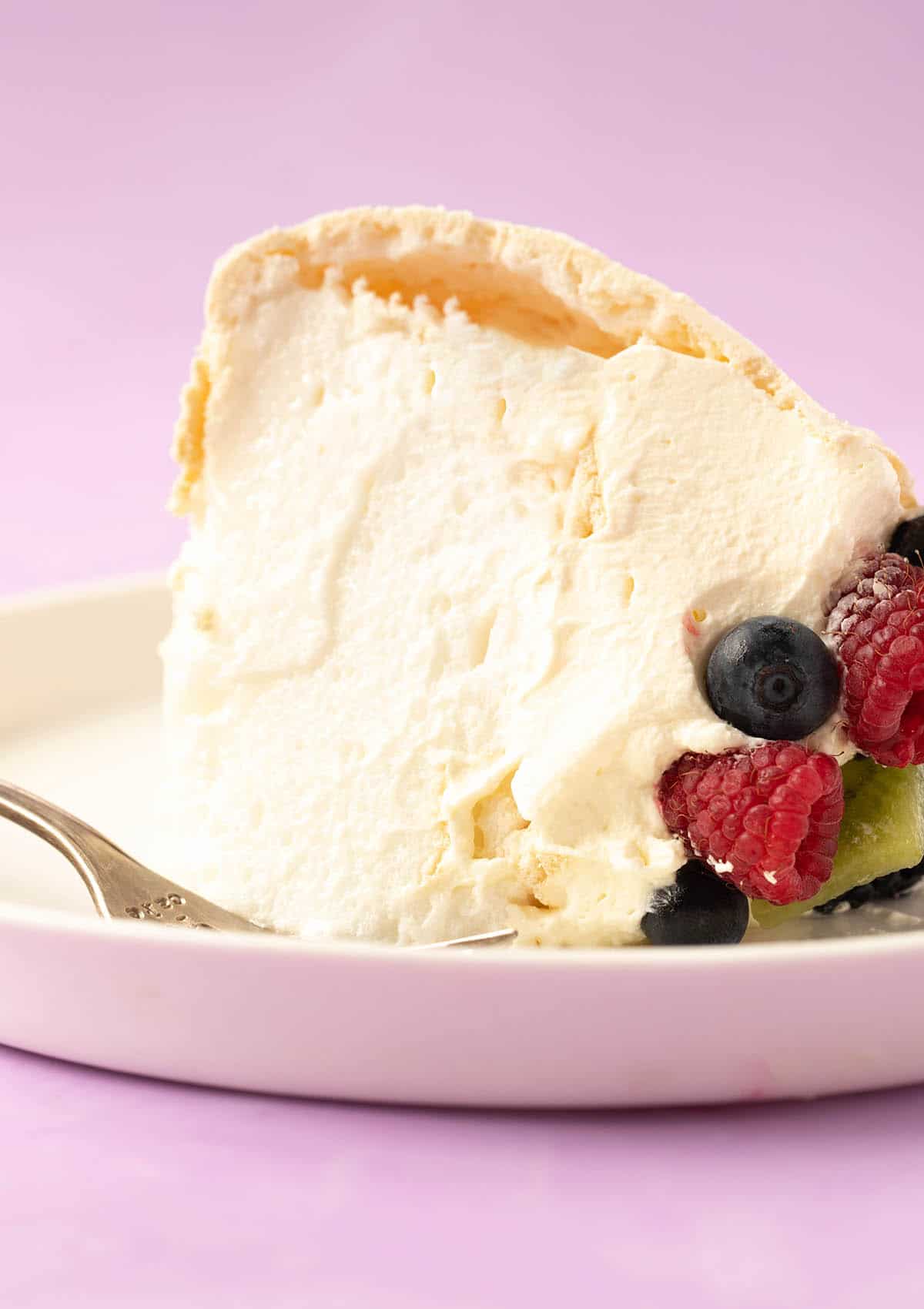
This is my mother-in-law’s famous Pavlova recipe she’s been making for over 30 years. Today, I’m sharing all her tips for how to make a tall meringue with minimal cracks, that boasts a crispy crust and a marshmallow-y centre. Topped with whipped cream and berries, it’s one of the most decadent desserts going around. You can also find this recipe in my cookbook, Something Sweet, on page 244.
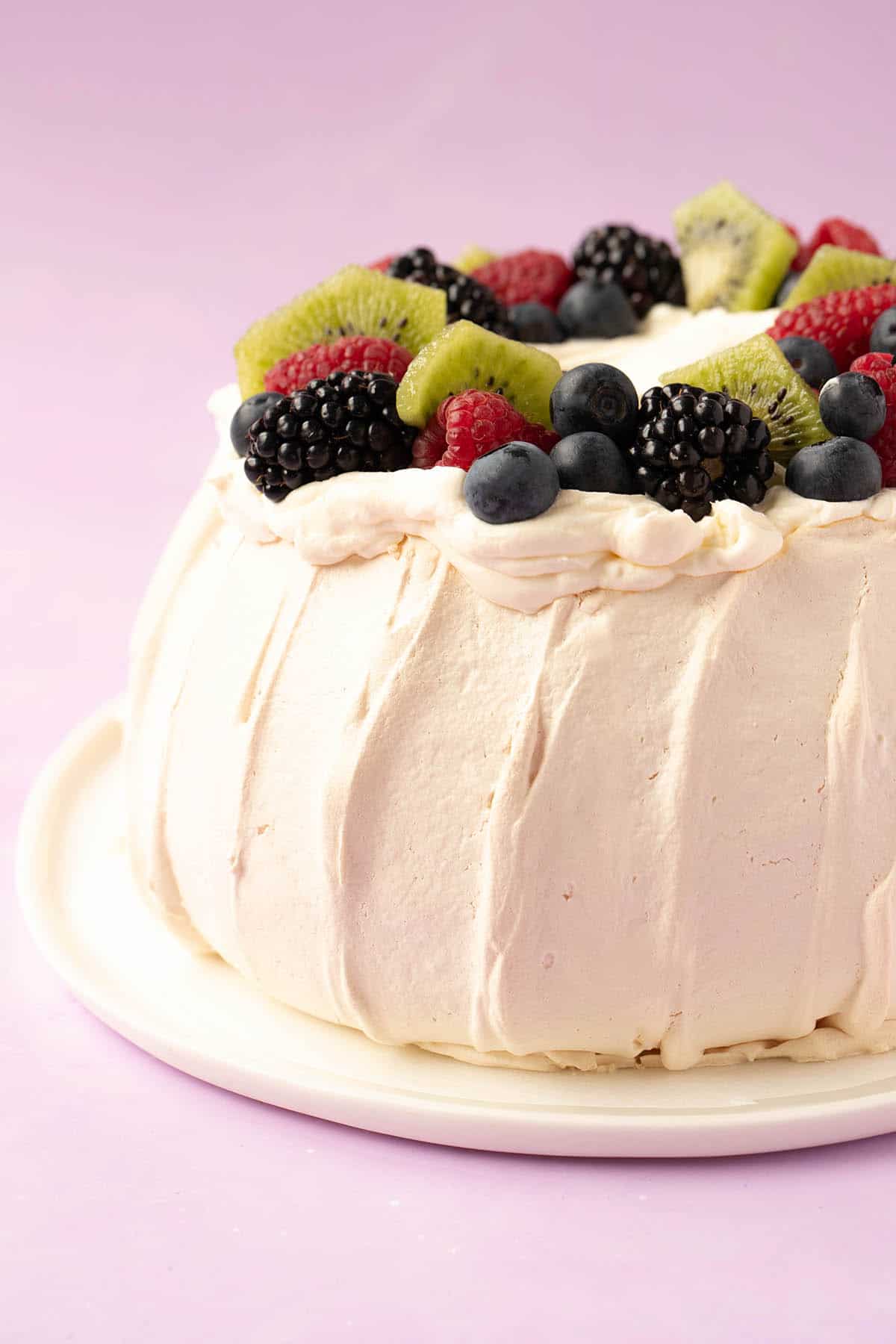
I love Pavlova. Crispy yet chewy, marshmallow meringue, topped with whipped cream and fresh berries. I think it’s one of the most delicious and impressive homemade desserts.
And my mother-in-law makes the best pavlova I’ve ever had.
Last year when I shared a video on Instagram of her making her annual Christmas Pavlova, I had so many requests for the full recipe. So she’s kindly agreed to share the recipe with us, along with all her tips, since she’s been making Pavlovas from scratch for over 30 years.
why you will love this recipe
- Few ingredients: You only need four ingredients for the meringue and it’s naturally gluten free too.
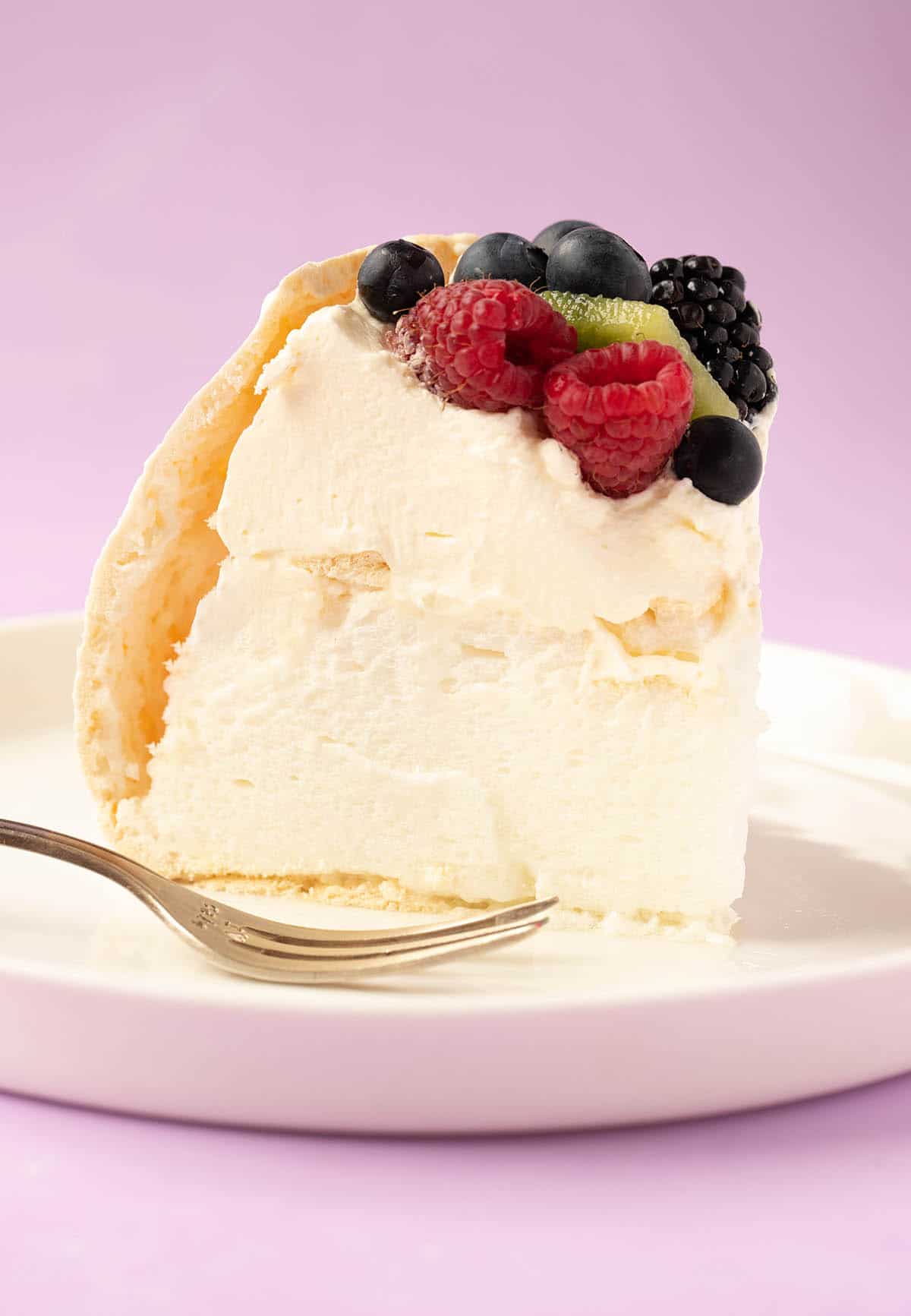
- Marshmallow: This TALL Pavlova results in a crisp crust and surprisingly light marshmallow-y centre.
- Easy to decorate: Fill the Pavlova with cream and you can decorate it with any fresh fruits or berries you like or are in season.
- Make-ahead: You can make this Pavlova the night and simply fill and decorate on the day of serving.
I recently tried your mother in laws pavlova recipe and I have to say, it turned out absolutely amazing—definitely the best I’ve ever made! The Pavlova looked stunning, it was light and airy.
– Christine
what is pavlova?
Pavlova is a meringue-based dessert that is very popular in Australia, particularly at Christmas time. It consists of egg whites and sugar, which are whipped to stiff peaks and then baked to create a delicate meringue shell, with a marshmallow-like centre.
It is usually topped with whipped cream and fresh fruits and berries. While the ingredients are few, it is notorious for being tricky to make. The meringue itself is extremely fragile and prone to cracking. But I’m here to give you all the tips you need to ensure your next Pavlova is a success.
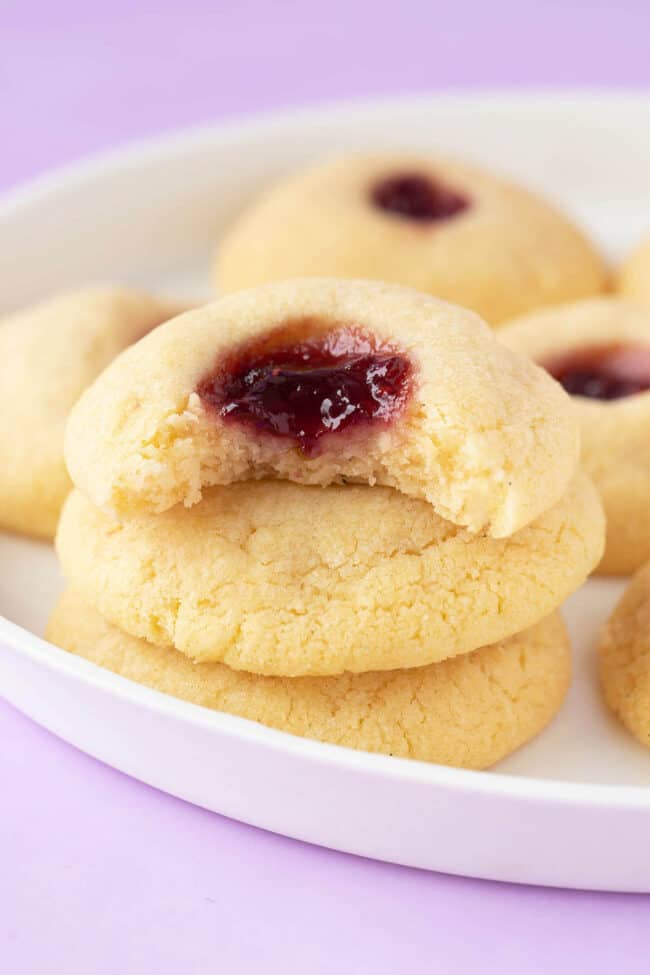
And if you want all the taste of Pavlova in a no-fuss slice, you’ve got to try our Pavlova Rocky Road next or my Mini Meringue Kisses!
Ingredients
The ingredients you need for Pavlova are few. It is decorated with whipped cream and fresh fruits, but you only need four ingredients for the meringue itself. Here’s what you will need:
- Egg whites
- Caster sugar: Or very fine sugar.
- Vanilla extract
- White vinegar
- Whipped cream and fresh fruits for serving.
how to make it
It’s important to take your time and read each step for making Pavlova very carefully. You need to ensure your sugar is completely dissolved before baking to ensure your Pavlova doesn’t weep or collapse. Here’s a quick guide on how to make it, but the full detailed instructions are included in the recipe card below.
- Separate your eggs very carefully, ensuring there are NO egg yolks in your egg whites. You don’t need the egg yolks for this recipe.
- Use a stand mixer fitted with a whisk attachment to start beating the egg whites on medium speed until they reach soft peaks – approximately 1-2 minutes.
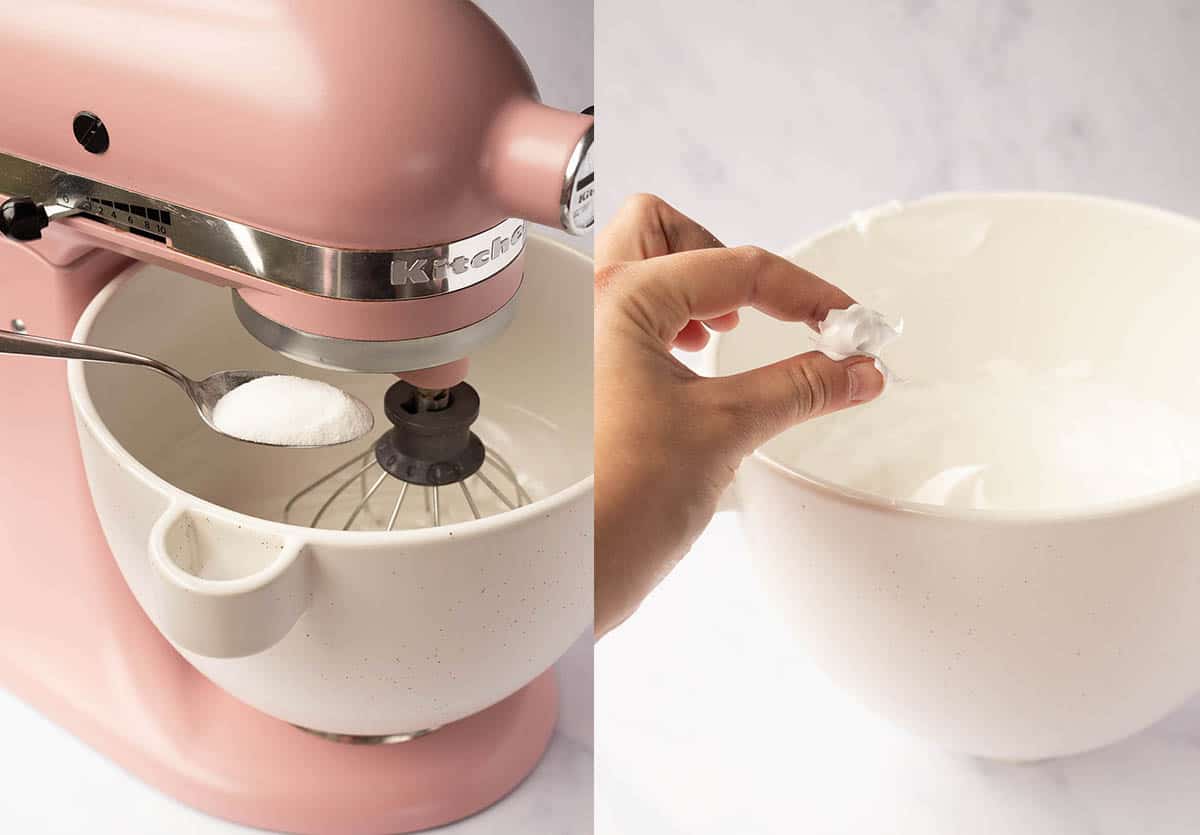
- Turn the mixer up to medium-high speed. Start to gradually add the sugar, 1 tablespoon at a time, while continuing to beat the egg whites.
- Continue until you have added all the sugar. Keep mixing until all the sugar has dissolved and the meringue is thick, white and glossy.
- The easiest way to tell if your meringue is ready is by rubbing a small bit of meringue between your finger and thumb and seeing if you can feel any sugar granules. If you can, keep mixing. As soon as it’s completely smooth and you cannot feel any sugar, stop mixing.
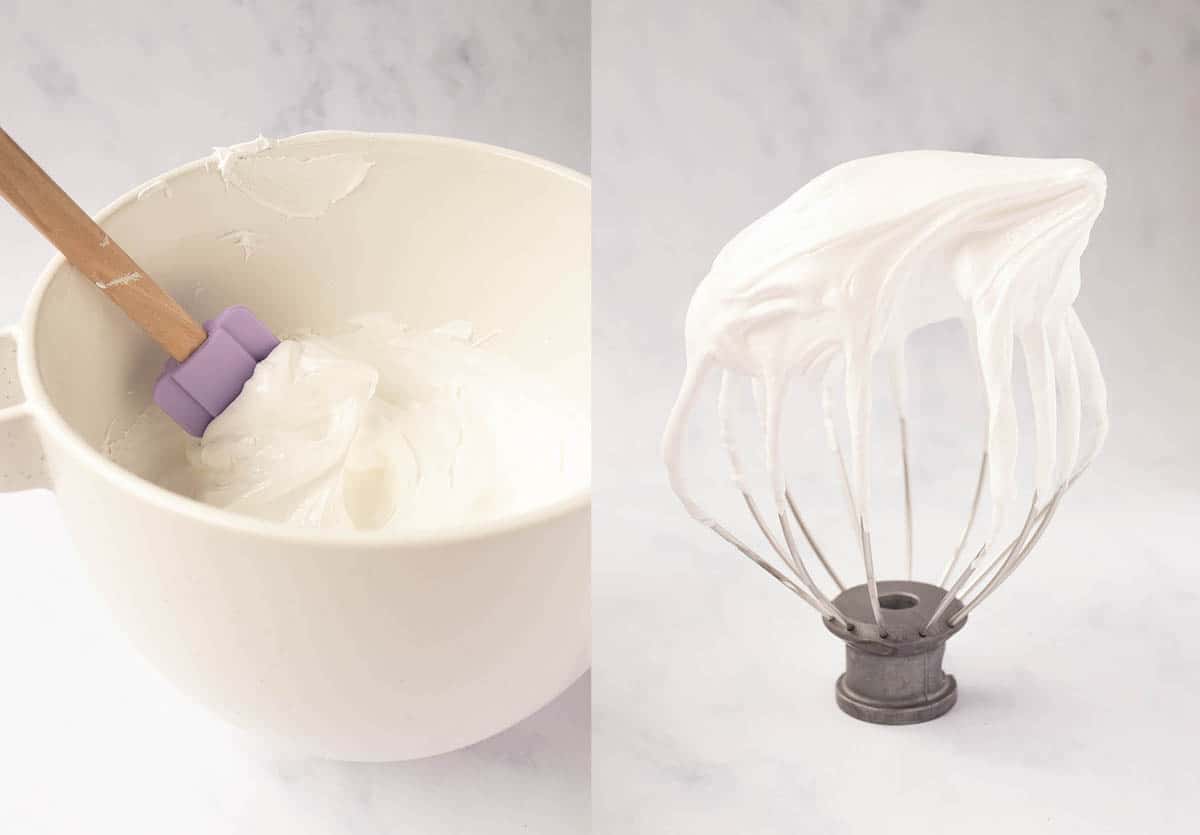
shaping pavlova
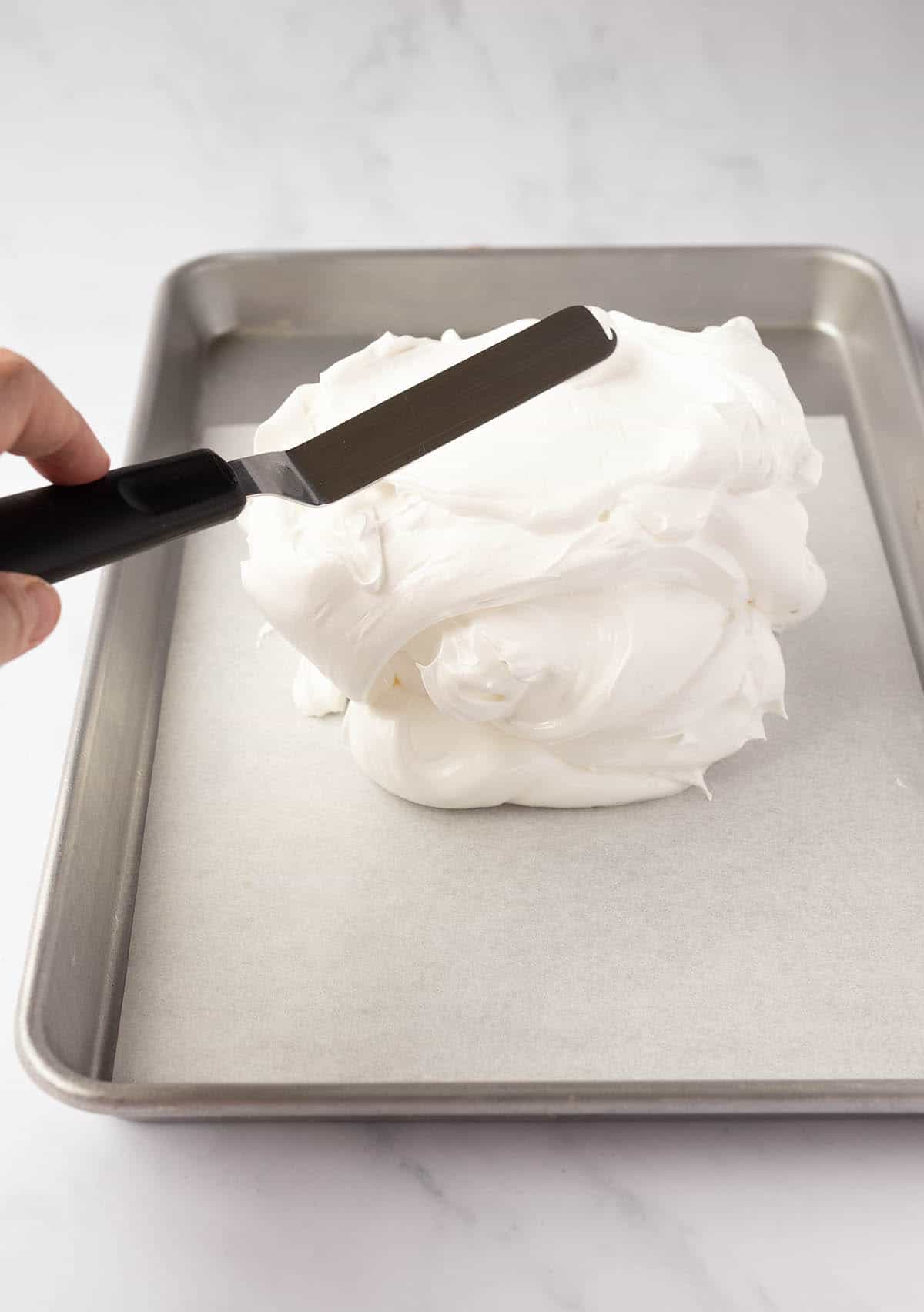
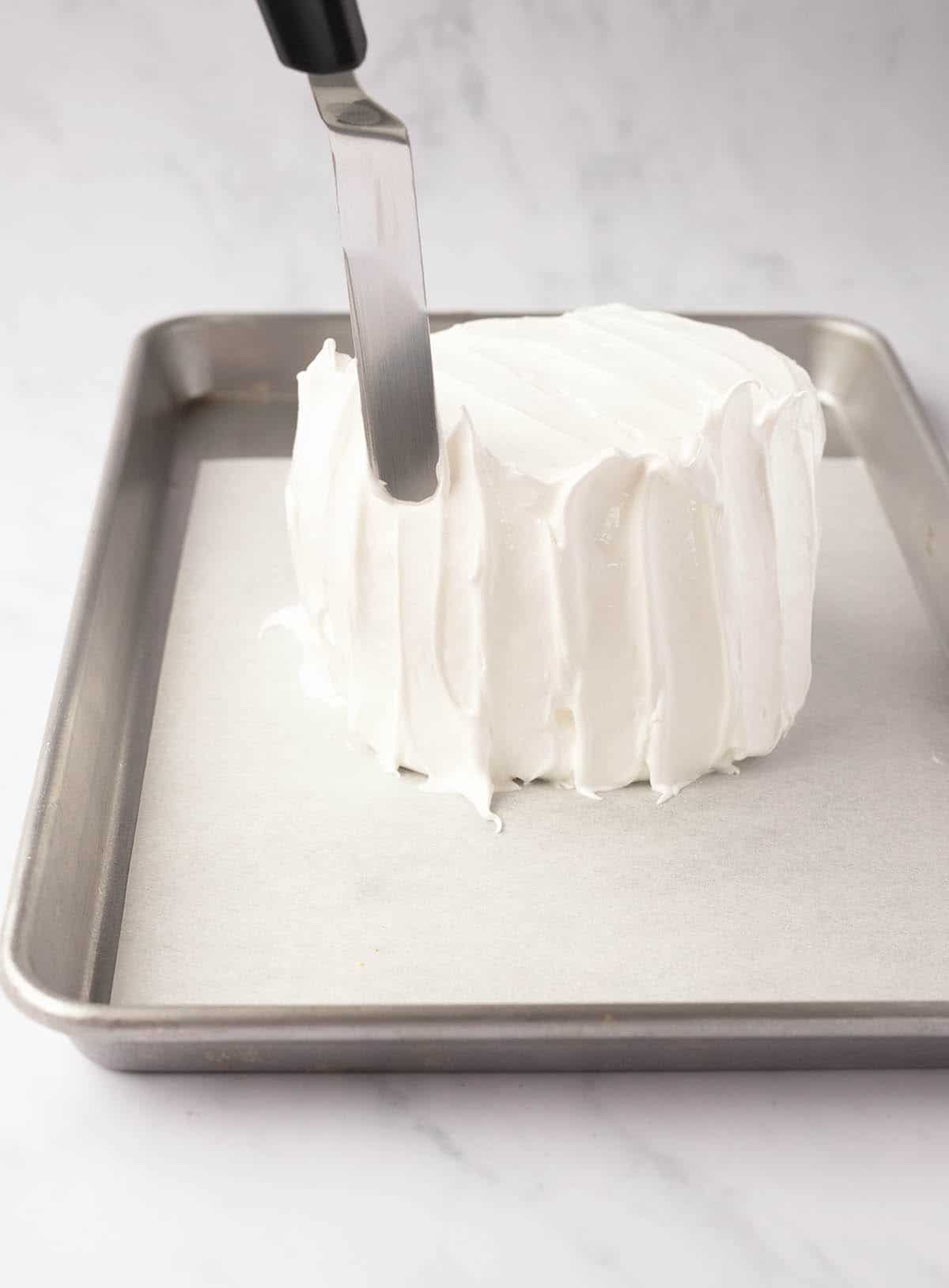
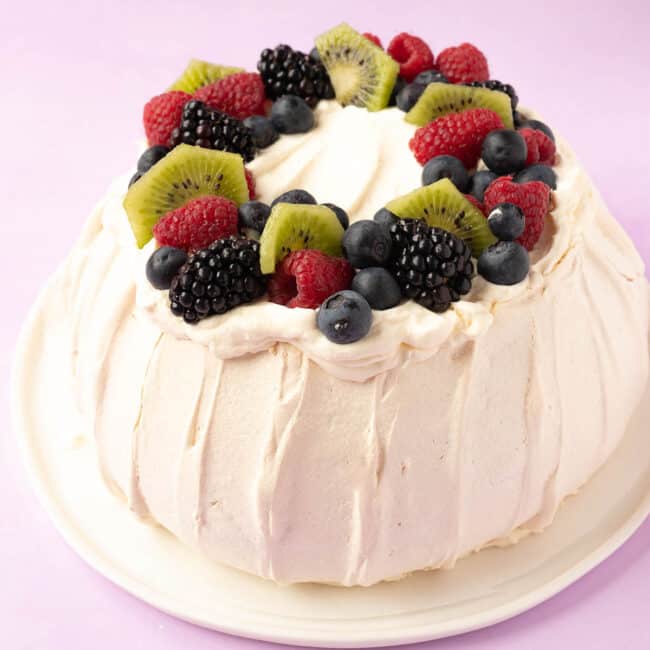
You can really bake Pavlova in any shape and size you like, but my mother-in-law’s famous Pavlova is purposely tall and striking. To create this shape, use a small spatula or palette knife to carefully manoeuvre the meringue to form a 6-inch circle, keeping it as tall as possible.
For stability, use a palette knife to craft tall strokes around the edge of the Pavlova, going from the bottom to the top. Then, gently smooth the top. This high-sided shape will boast a very chewy, marshmallow-like middle, while still leaving plenty of room for cream and fruit on top.
baking pavlova
Pavlova requires a very delicate bake on a low oven temperature. You are essentially drying out the meringue rather than cooking it through. If your oven is too hot, your meringue will over-brown on the outside and be wet and under-baked in the middle.
save this recipe
How do I know when it’s ready?
Every oven is different so I suggest using the cook times as a guide only. You’ll know your Pavlova is cooked when it turns a very light golden brown and is dry and crisp. It should sound hollow when lightly tapped – careful though, even a light tap can poke a hole in your meringue.
Perhaps the most important part of baking a Pavlova is the cooling process. It’s important to let Pavlova cool very slowly, so leave it in the oven (turned off) with the door slightly ajar for hours until it is completely cooled.
If you are making it the day before serving, you can even shut the oven door (once it’s completely cooled) and leave the Pavlova in there overnight.
Remember, moisture is the enemy of meringue so don’t place it in the fridge or anywhere humid, wet or steamy, as it’s likely your baked meringue will soften, crack or weep.
how to decorate pavlova
You only want to decorate your Pavlova when you are ready to serve it – the less time it has to spend in the fridge the better.
My mother-in-law has a clever tip for decorating Pavlova with oodles of cream and fruit. Since Pavlova’s typically have a slightly domed top, it can be hard to pile on plenty of cream and fruit without it all falling over the sides.
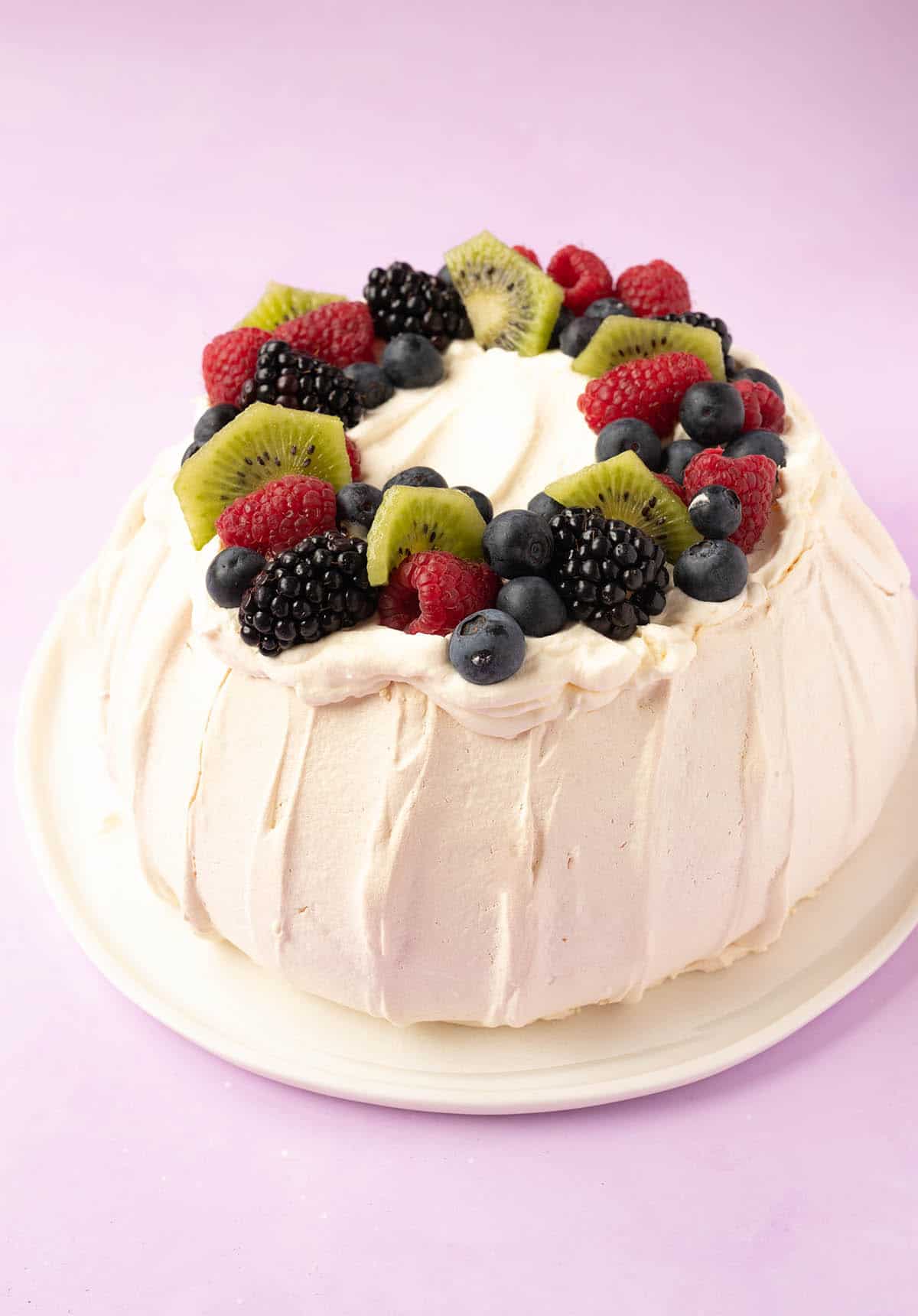
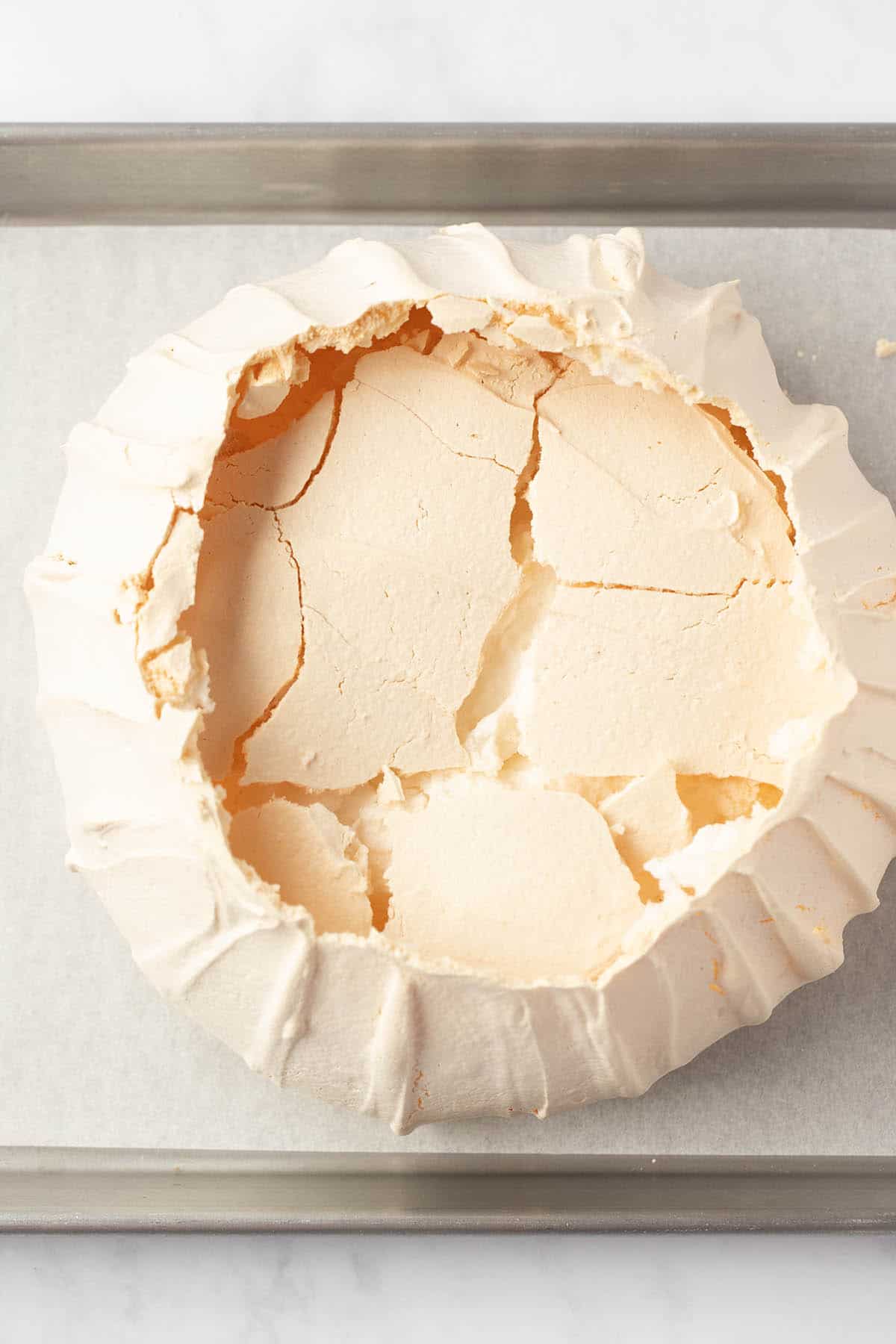
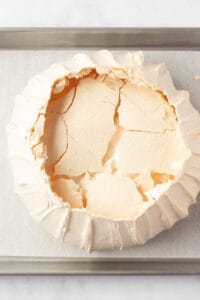
So once your Pavlova is completely cooled, carefully use a small sharp knife to cut a circle out of the top of the Pavlova. The crust on top will crumble into pieces revealing the marshmallow middle underneath. Carefully lay the crust back on top of the marshmallow meringue.
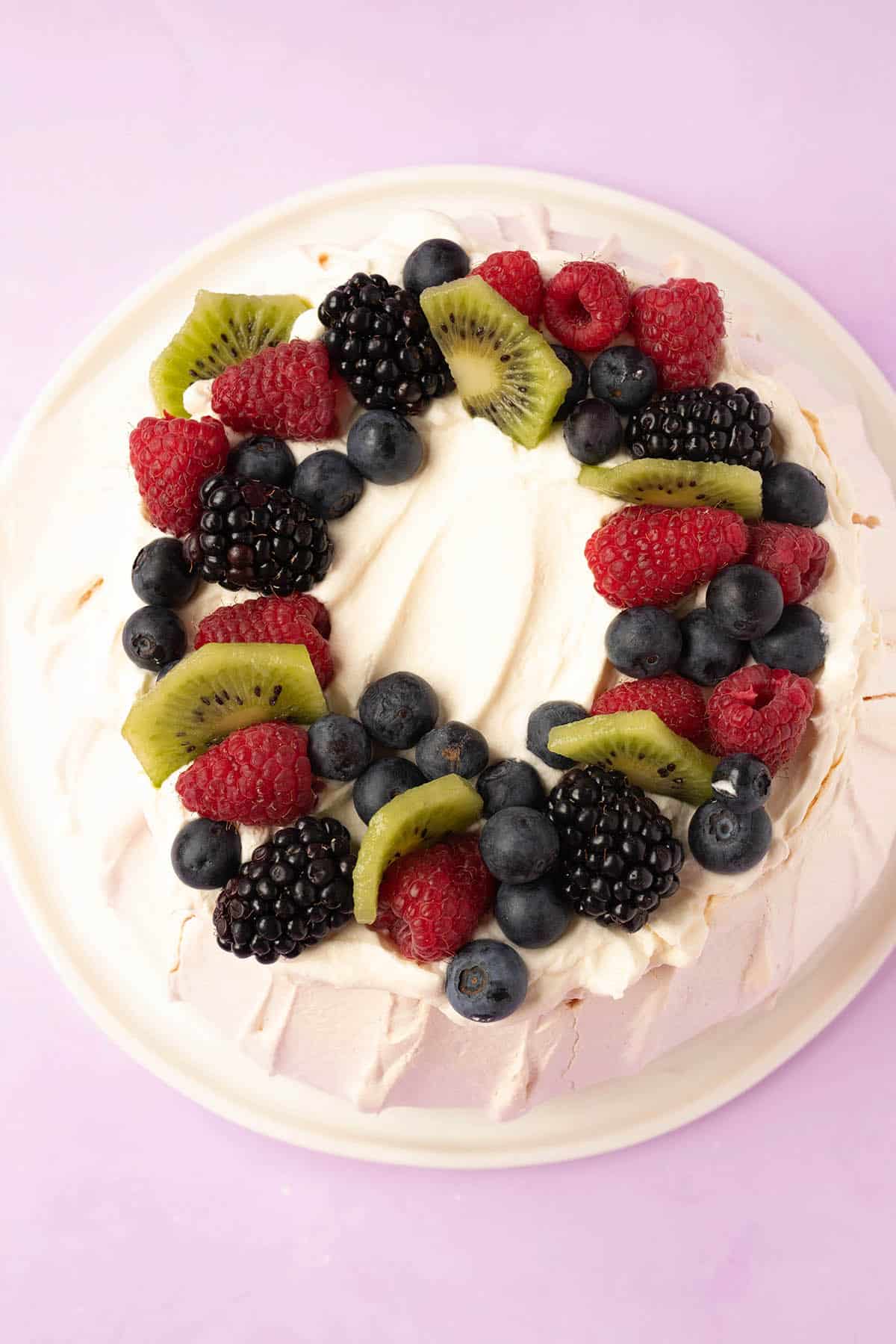
This technique gives you the perfect crater to then carefully fill with fresh cream and berries.
- Use a sharp knife to carefully cut out around the top of the meringue.
- Carefully layer the crust pieces back on top of the marshmallow centre.
- Add spoonfuls of freshly whipped cream on top.
- Decorate with your favourite fresh fruits and berries.
Helen’s favourite toppings for Pavlova include freshly whipped cream, raspberries, blueberries, blackberries, strawberries and sliced kiwi fruit.
helen’s tips for perfect pavlova
- Avoid a humid environment: Try attempting to make your Pavlova on a cool, low-humidity day if possible. Steam or heat will prevent your meringue from whipping, so make sure you don’t have a kettle boiling near-by, or a hot oven cooking dinner, for example. Ensure your kitchen is as cool as possible.
- Begin with clean, dry equipment: Start by wiping out your mixing bowl and all your utensils with a little vinegar on a paper towel to ensure they are completely clean and completely dry.
- Ensure there are NO egg yolks in your egg whites: It is easier to separate egg whites and egg yolks when using room temperature eggs. Do this carefully, one at a time. If even a spot of egg yolk lands in your egg whites, your eggs won’t whip up properly. And the only way to fix it is to start again.
- Keep whipping until all the sugar is dissolved: Beating together your egg whites and sugar will take time. But you’ll know your meringue is ready when you can rub a small amount of meringue between your forefinger and thumb and you cannot feel any granules of sugar.
- Watch closely for losing volume: While it takes time to get your meringue mixture to reach stiff peaks, you can over-beat meringue. Keep a close watch and you’ll know if you are over-beating your meringue if you start to lose volume.
- Bake meringue on a low heat: Pavlova requires a very delicate bake on a low oven temperature. If your oven is too hot, your meringue will over-brown and the middle will be wet and under-baked.
- Leave meringue to cool in oven: Once your meringue is baked, turn oven off and leave the meringue in the oven with the door ajar. Leave it in there for at least 2-3 hours to completely cool.
troubleshooting pavlova
Any grease or moisture in your bowl or on your utensils will prevent your eggs from whipping up to stiff peaks. Make sure everything is clean and fully dry before starting. If there is even a speck of egg yolk in your egg whites, you’ll also have trouble getting volume out of your egg whites.
There are a few common reasons why Pavlovas can weep once cooled. It could be a sign your sugar was not completely dissolved before baking and/or a result of under-baking your meringue. It could also mean your Pavlova has been affected by the weather and the humidity.
Pavlovas are prone to cracking, so rest assured this is very normal. Even a perfect Pavlova will have a few minor cracks here and there. However, if your meringue cracks to the point of collapsing, it might be a sign that your oven temperature was too high and/or your egg whites were whipped too quickly – try lowering the speed of your mixer next time. If your meringue was under-baked, it could also mean it’s extra fragile.
more summer desserts we love
Did you make this recipe? Show me a photo in our baking community. Join me on Instagram, YouTube, Facebook, Pinterest and TikTok for more amazing recipes or buy my NEW cookbook, Something Sweet.
Let’s Bake
Mother-in-law’s Pavlova recipe
A tall Pavlova decorated with whipped cream and fresh fruits.
Ingredients
- 6 large eggs, room temperature
- 300 grams (1 and 1/2 cups) caster sugar or very fine sugar
- 1 and 1/2 teaspoons white vinegar
- 1 teaspoon vanilla extract
- 500 ml (2 cups) thickened or heavy cream, to decorate
- Fresh fruits or berries, to decorate
Instructions
- Preheat oven to 120 C (250 F) standard / 110 C (230 F) fan-forced. Line a large aluminum baking tray with non-stick baking or parchment paper. Ensure your mixing bowl and utensils are clean and completely dry.
- Separate your eggs very carefully, ensuring there are NO egg yolks in your egg whites.You won’t need the egg yolks for this recipe.
- Use a stand mixer fitted with a whisk attachment to start beating the egg whites on medium speed until they reach soft peaks – approximately 1-2 minutes.
- Turn the mixer up to medium-high speed. Gradually add sugar, 1 tablespoon at a time, while continuing to beat the egg whites.
- Continue until you have added all the sugar. Keep mixing until all the sugar has dissolved and the meringue reaches stiff peaks. It should be thick, white and glossy. The easiest way to tell if your meringue is ready is by rubbing a small bit of meringue between your finger and thumb and seeing if you can still feel any sugar granules. If you can, keep mixing. As soon as it’s smooth and you cannot feel any sugar, stop mixing.
- Finally, add vinegar and vanilla to meringue mixture and beat on medium-high for 1 minute.
- Transfer meringue to prepared tray and use a small spatula or palette knife to shape the meringue into a 6-inch circle, keeping it as tall as possible.
- Then, use the knife to pull upwards to make long strokes all the way around the edges. This will help provide the meringue with more stability.
- Bake meringue for approximately 1 and 1/2 hours or until it is lightly golden, crisp, and hollow sounding when lightly tapped. Turn the oven off and leave the Pavlova in the oven to cool completely, with the door ajar.
- To decorate, carefully use a small sharp knife to cut a circle out of the top of the Pavlova. The crust on top will crumble into pieces revealing the marshmallow middle underneath. Carefully lay the crust back on top of the marshmallow meringue. See photo below for guidance.
- Place cream in a large mixing bowl. Use an electric mixer fitted with a whisk attachment and start beating on a medium speed.
- Continue to mix and watch closely as the cream changes texture. Instead of going by time, look for visual clues. Your cream will slowly thicken and become smooth, creamy, and cloud-like.
- Dollop cream all over the top of the meringue. Carefully arrange fresh fruits and berries on top of the cream. Serve immediately.
Notes
Egg whites: Be very careful when separating your eggs. Even if a speck of egg yolk lands in your egg whites, your meringue won’t whip up correctly and you’ll need to start again.
Caster sugar: You need to ensure your sugar is completely dissolved before baking your meringue. The easiest way to test this is by rubbing a small amount of meringue between your forefinger and thumb and seeing if you can feel any granules of sugar. If you can, keep mixing. As soon as you can’t, stop mixing. My Mother-in-law even checks the meringue after each spoonful of sugar is added, to ensure the sugar is dissolved before adding the next.
Fruits and berries: You can really use any fresh fruit or berries you like to decorate your Palova. Helen’s favourite toppings include raspberries, blueberries, blackberries, strawberries and sliced kiwi fruit.
Baking and cooling: It’s very important to let Pavlova slowly, so leave it in the oven (turned off) with the door slightly ajar for hours until it is completely cooled.
Making ahead: If you are making it the day before serving, you can even shut the oven door (once it’s completely cooled) and leave the Pavlova in there overnight. Alternatively, loosely cover with baking paper and leave it at room temperature. Do not put it in the fridge.
Cracking: Pavlovas are prone to cracking, so rest assured this is very normal. Even a perfect Pavlova will have a few minor cracks here and there. However, if your meringue cracks so much it’s at the point of collapsing, it might be a sign that your oven temperature was too high and/or your egg whites were whipped too quickly – try lowering the speed of your mixer next time. If your meringue was under-baked, it could also mean it’s extra fragile.
Weeping: There are a few common reasons why Pavlovas can weep once cooled. It could be a sign your sugar was not completely dissolved before baking and/or a result of under-baking your meringue. It could also mean your Pavlova has been affected by the weather and the humidity.
Nutrition Information
Serving Size: 1 slice Calories: 247 Sugar: 27.8 g Sodium: 44.1 mg Fat: 13.3 g Carbohydrates: 28.8 g Protein: 4.2 g Cholesterol: 126.9 mg
Hi, I’m Jess, the creator of Sweetest Menu and the author of Something Sweet. A self-taught baker and published recipe writer who can’t stop making easy and delicious baking recipes.

Joanna says
hello! I made this pavlova for Christmas this year and even though it did crack quite a bit (my first time!) it was delicious and everyone was impressed! 🙂 I do have one question – how long should we mix the egg whites with the sugar – ballpark number? 🙂 I know we should check if the sugar is dissolved, but I just wanted an an estimate as to whether it’s closer to seven minutes or 10 and above in order not to overmix them…
Jessica Holmes says
Hi Joanna, so glad you enjoyed this one! Pavlovas are meant to crack so don’t worry too much – they are still always delicious. I asked Helen for you and she said a good 20 minutes! She is sure to check as she goes to make sure the sugar is fully dissolved after each addition. And her goal from start to finish (beating), is to do it in 30 minutes. Any longer and she finds the meringue can start to lose air and is more likely to crack or be overly fragile. I hope that helps!
Megan says
How many ml of egg whites would it be?
Jessica Holmes says
Hi Megan, typically our large eggs have 30 grams of egg white. So for this recipe, you would need approximately 180 grams (or 180 ml) of egg white. I hope that helps!
Elizabeth Preuss says
This dessert looks lovely. I can’t wait to try it. I have two questions. First, why does the whipping cream not have sugar and vanilla like we would normally make whipping cream?
Secondly, how would you store leftovers? Thanks so much for sharing this beautiful dessert.
Jessica Holmes says
Hi Elizabeth, you are welcome to add sugar and vanilla to the whipping cream. In fact, I think you are right and my MIL does do that. Personally, I find it is sweet enough on it’s on. Also, any leftovers can be kept covered in the fridge.
Lee says
Would this turn out OK with a sugar substitute like erythritol? (For diebetic) Thank you! Looks amazing!
Jessica Holmes says
Hi Lee, I haven’t tested this recipe with a sugar substitute so I can’t say I’m sorry. I’m not sure if would work though, as the sugar really is a key ingredient.
Dee says
This recipe was a winner! Halved the recipe and PERFECT for a smaller portion. Can’t wait to use full recipe for Christmas. Pav came out beautifully, thanks MIL!
Jessica Holmes says
That is so wonderful to hear Dee! So pleased you enjoyed it!
Inesa Caplikiene says
Hi, I made Pavlova exactly what you said in the recipe but when I turned it off and open the oven, it was flat like a pancake what would be wrong that it happened?.
Jessica Holmes says
Hi Inesa, I’m so sorry to hear that. If your meringue collapsed, it could be a sign that your oven temperature was too high and/or your egg whites were whipped too quickly – try lowering the speed of your mixer next time. An under-baked meringue will also be extra fragile. Your comment about it being flat as a pancake makes me think your meringue wasn’t whipped thoroughly. But the easiest way to troubleshoot would be by sending me a photo at jessica@sweetestmenu.com
Samira says
Just tried out the recipe, was very easy to follow and the pavlova baked beautifully! I left it in the oven to cool overnight but in the morning I found that only the middle had cracked and sunken inwards while cooling. I know it will be covered with the cream and the fruits, but how can I prevent this for next time?
Jessica Holmes says
Hi Samira, I’m so pleased you had success. Cracking is definitely a natural part of pavlova and the delicate structure is what makes it so delicious. Sinking or a collapsing pavlova can be a sign of a few things, either over-mixing the egg whites or not mixing the sugar enough to ensure it’s fully dissolved. Humidity can also have an effect or even older egg whites are believed to affect it too. I’m sure it still tasted amazing!
Susan says
Such a gorgeous Pavlova. Here in the US, finding caster sugar can be difficult. I use my food processor to pulverize the sugar, just into finer granules. Otherwise, getting that grainy texture in the egg whites takes forever!
Jessica Holmes says
I’m so glad you enjoyed it Susan! Great tip for the caster sugar substitute too!
Janet says
Can you use liquid egg whites from a carton?
Jessica Holmes says
Hi Janet, I’ve never tried myself, but I checked in with my MIL and she said she thought that would work fine! Let us know how it goes.
Jo says
I tried to make this but it just didn’t allow me to build it tall, it was more like a normal round pavlova. Can you let me know what I may be doing wrong pleas.
Jessica Holmes says
Hi Jo, thanks for trying one of my recipes. What do you mean it didn’t allow you to build it tall? Do you mean it wasn’t stiff enough? If so, that would just be a case of not beating it enough. The weather can also deeply effect meringue so you really need to do it on a cool day or in a cool kitchen.
Heather H says
Hi there ! Excited to try this recipe, but does any know if you can make it with a plant based cream like soy cream? My son is celiac and dairy free and want to make it so he can enjoy it as well !!
Jessica Holmes says
Hi Heather, I haven’t worked much with soy cream, but the cream is really just a finishing touch so I think it would be fine. It may not whip like regular cream but I’m sure it would still taste delicious.
Christine Karanasios says
I recently tried your mother in laws pavlova recipe and I have to say, it turned out absolutely amazing—definitely the best I’ve ever made! The Pavlova looked stunning, it was light and airy. I topped it with the same fresh fruits and whipped cream as suggested.I received so many compliments from friends and family about how great it looked and tasted! It was a huge hit at our gathering, and I can’t wait to make it again.
Jessica Holmes says
That’s so wonderful to hear Christine! I’ll let my MIL know – she’ll be chuffed!
Shirley says
Hi! Looking forward to making this pavolva! I would like to add a lemon curd you think that would be ok in this recipe? If so do i add it on top of whip creamed or under it thank you!
Jessica Holmes says
Hi Shirley! That sounds lovely. I think on top of the cream would be the way to go! Let me know how it goes 🙂
Tess says
In the oven for NYE .. and she’s looking tall and gorgeous! Can’t wait to enjoy this special pav as my last dessert of the year. And I already know it’s going to be amazing
Jessica Holmes says
How wonderful! Happy new year Tess!
Josh says
Loved it!
Sandra says
Pavlovas are also very popular in Croatia where I come from! Thank you for this, can’t wait to try and impress my friends and family who know I’m the least domesticated person they know.
Jessica Holmes says
Yay! I hope you love it Sandra! I also love hearing that Pavlova is a loved dessert even on the other side of the world.
Mary says
Popular in Croatia! Are you sure? I was born in Zadar Croatia and I’ve never heard that. I visit regularly. I live in Melbourne Australia and it’s very popular here. I make a great Pavlova but can’t wait to try this one.